Your Search for the Best Car to Buy in India Starts Here
Buying a car most in India is not a small decision. It is one of the biggest purchases most families make, and the market right now has never been more confusing. Over 25 brands. New launches every few weeks. Prices vary between cities, fuel types, and variants. And a dozen different people giving you a dozen different opinions.
Carbazzarindia cuts through all of that.
We bring you the latest cars and prices in India in one place, with specs that go beyond the brochure, reviews written for actual Indian roads, and tools that help you compare, shortlist, and decide without spending weeks doing it alone.
Prices that are actually up to date. Ex-showroom prices change without announcement. Road costs vary between states. When you check a price on Carbazzarindia, it reflects the current reality, not something from six months ago.
Specs that matter in real life. Boot space with all seats up. Real-world city mileage, not just ARAI numbers. Ground clearance on Indian roads. NCAP safety ratings. These are the details that affect your daily experience, not just the numbers that look good in a comparison table.
A comparison tool you will actually use. Shortlisted two cars, but not sure which to pick? Our car comparison tool puts any two models side by side across every spec that matters. Mileage, safety, features, dimensions, and price. No back and forth between multiple tabs.
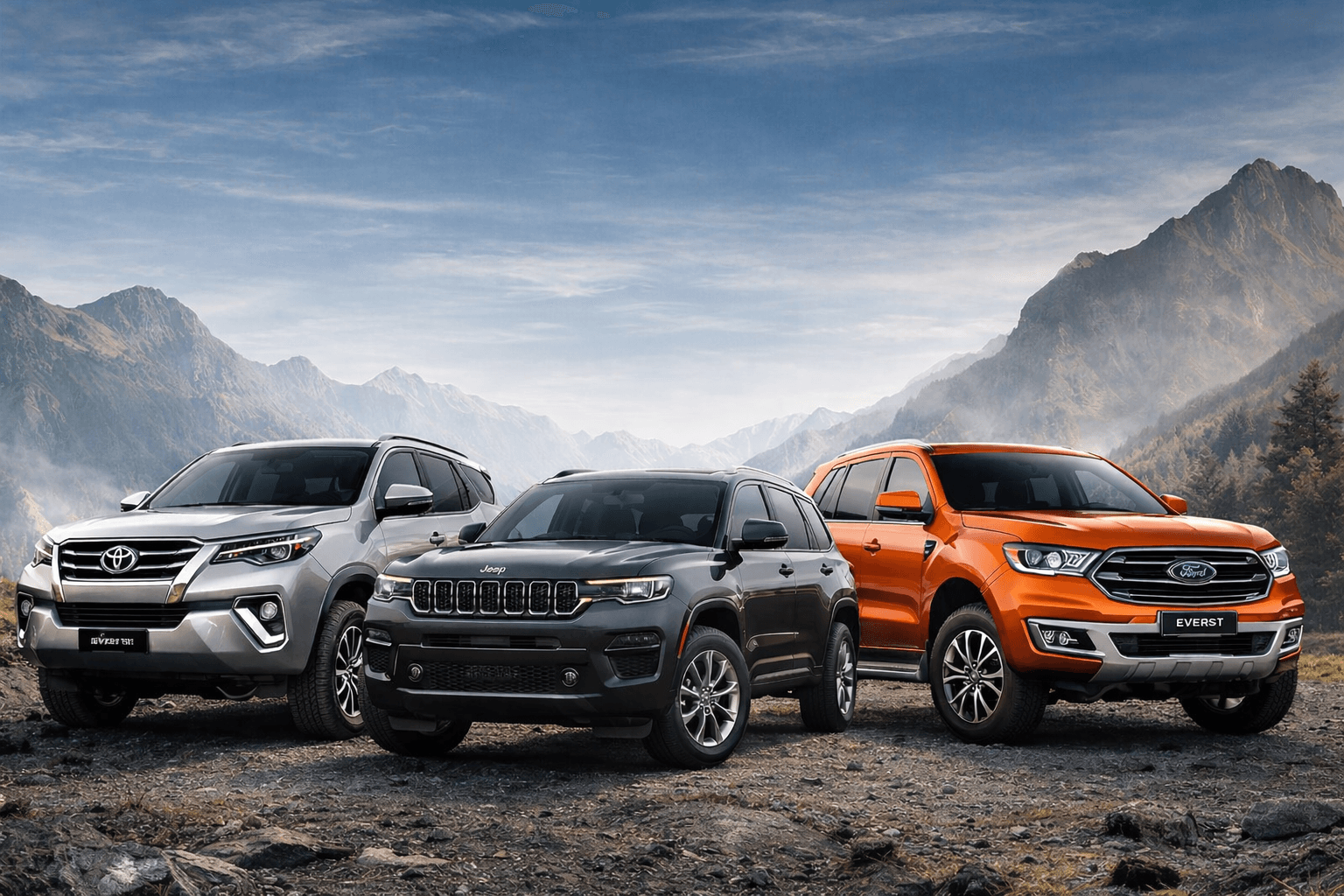
Every car brand is covered, from budget to premium. Whether you are looking at Maruti Suzuki, Hyundai, Tata Motors, Mahindra, Toyota, Kia, Honda, Skoda, or Volkswagen, or considering something from the luxury segment like Mercedes-Benz, BMW, or Audi, everything is here. We cover all the best car brands in India, so you never have to look elsewhere. See all car brands in India
Reviews that reflect Indian driving, not European test tracks. Our team drives every car in Indian conditions. Bumpy urban roads, highway runs, full passenger loads, summer afternoons with the AC working overtime. That context is what makes our reviews useful rather than just technically accurate.
Explore New Cars in India 2026
The range of new cars in 2026 covers every segment and every budget. Whether you are looking at electric cars India has to offer, compact SUVs, hatchbacks, or luxury vehicles, every category is covered here.
Best Compact SUV in India 2026: The compact SUV is the most popular car category in India, and it is easy to see why. Practical, well-priced, and capable of handling both city traffic and long highway drives. The Tata Nexon, Maruti Brezza, Hyundai Creta, Kia Seltos, and Skoda Kushaq consistently top the sales charts. Compare real-world mileage, safety ratings, and features before you narrow down your list.
8 Seater Cars in India: Large families know the frustration of not fitting everyone into one car. The Toyota Innova Hycross, Kia Carnival, and Maruti Suzuki Invicto are the three most talked about names in this space right now, each suited to a different kind of buyer and a different budget.
Electric Cars in India: The Tata Nexon EV and MG ZS EV brought electric cars into the mainstream. The Hyundai IONIQ 5 and Kia EV6 took it to the premium. India`s EV market in 2026 has real choices at multiple price points. Our EV Zone covers honest, real-world range figures, home charging setup costs, government subsidies, and monthly running cost comparisons so you know exactly what you are signing up for.
Luxury Car Brands in India:Mercedes-Benz, BMW, Audi, Volvo, Land Rover and Porsche are no longer rare sights on Indian roads. The premium segment is growing fast, and the product quality has never been better. We cover every variant, on-road price, and feature breakdown so you can make a well-informed decision at the top end of the market.
Hatchbacks: Smart, Efficient and Easy to Live With:If you drive mostly within the city, a good hatchback is still one of the smartest car choices you can make. Lower fuel costs, easier parking, and simpler maintenance over the years of ownership. The Maruti Swift, Hyundai i20, and Tata Altroz are the names most buyers shortlist in this category.
Sedans: Comfort, Refinement and Road Presence:Sedans have taken a back seat in conversation, but not in performance. The Honda City, Hyundai Verna, Skoda Slavia, and Volkswagen Virtus all offer a level of rear-seat comfort and driving refinement that most SUVs at the same price cannot match.
Best Mileage SUV Car in India
Fuel costs are one of the most important ownership considerations for Indian buyers, and among SUVs, the answer has changed significantly over the last couple of years. The Maruti Grand Vitara strong hybrid and Toyota Urban Cruiser Hyryder return real-world city mileage of 22 to 26 kmpl based on owner reports, which is genuinely extraordinary for a full-size compact SUV. For the buyer searching for the best mileage SUV car in India, these two are the clearest answers right now. For highway-focused buyers, the Hyundai Creta and Tata Nexon diesel variants both return strong numbers above 20 kmpl on open roads.
A car`s safety rating is one of the most important things you can check before buying, and one of the most overlooked. Global NCAP independently crash tests cars sold in India and rates them from zero to five stars. A 5-star car has been tested for how well it protects adults, children, and pedestrians in a real collision. Models like the Tata Nexon, Tata Punch, Mahindra XUV 3XO, and Mahindra XUV700 have achieved this rating. When two cars are similarly priced, the one with a higher safety rating is the more responsible choice for a family.
Compare Cars India: See Any Two Models Side by Side
Thousands of Indian buyers compare cars India wide on Carbazzarindia every day before making their final call.
Maruti Grand Vitara vs Toyota Hyryder. Hyundai Creta vs Kia Seltos. Mahindra XUV7XO vs Tata Safari. These head to head comparisons happen thousands of times every day among Indian car buyers, and most of the time the answer is not obvious until you see the two cars side by side across every specification that matters to you specifically.
Our compare cars tool gives you exactly that view. Engine specs, mileage, boot space, safety rating, features, and the current ex showroom price India wide for your city, all in one place.
You can read every spec sheet and watch every review video, but nothing tells you whether a car is right for you like actually driving it. The way it rides over a speed breaker, how well the AC cools the rear seat, and how easy it is to see out of in traffic. These things only reveal themselves in person.
Book a test drive through Carbazzarindia for your shortlisted model, available across all major Indian cities.
People usually begin with the wrong approach. They ask which car is better instead of which car suits their lifestyle better. Start with three factors: your monthly budget taking into account EMI and fuel cost, the number of kilometres you travel per month, and what kind of roads, city roads or highways, you will be travelling on. This way, you can narrow down the choices quite easily. A customer who drives up to 800 kilometres per month on Bangalore roads will have a very different choice than another customer who travels between Delhi and Chandigarh, covering a distance of 2,500 kilometres each month. Use the Carbazzarindia Find Cars tool to filter by body type, fuel type, and budget, then compare your final two or three options before making a call.
Q2. What is the difference between ex showroom price and on road price?
This is one of the most common points of confusion for first time car buyers in India. Ex showroom price is the base price of the car at the dealership before any government charges are applied. On-road price is the amount you actually hand over, which includes RTO registration charges, road tax (which varies significantly between states), insurance for the first year, and TCS on cars above a certain price. For most mainstream cars in India, this adds Rs 1.5 to 3 lakh on top of the ex-showroom figure. For premium cars, the gap can be Rs 3 to 5 lakh or more. Always ask the dealer for a complete on-road price breakup for your specific city before committing to a budget.
Q3. What is the best time to buy a car in India?
Three periods consistently deliver the best deals. March, when dealerships are pushing hard to close the financial year and are more flexible on discounts and add-ons. The festive window from October to November covers Navratri, Dussehra, and Diwali, when both manufacturers and dealers offer their strongest exchange bonuses and accessories packages. And December, when dealers need to clear current-year stock before the year turns. Outside these windows, deals are thinner but not impossible, especially when a new variant or model update is coming, and the current version needs to move.Track upcoming car launches on Carbazzarindia , so you know when it is worth waiting and when it is not.
Q4. Which fuel type should I choose between petrol, diesel and hybrid?
The single most useful question to answer before choosing a fuel type is how many kilometres you drive every month. Under 1,200 kilometres a month with mostly city driving, petrol is the most sensible choice overall. Lower purchase price, simpler servicing, and the savings from diesel or hybrid rarely recover the price difference at this mileage level. Between 1,200 and 2,000 kilometres a month in city heavy conditions, a strong hybrid now makes a clear financial case. Cars like the Maruti Grand Vitara hybrid return 22 to 26 kmpl in real city driving, and the fuel savings over four to five years comfortably cover the higher upfront cost. Above 2,000 kilometres a month with significant highway use, diesel still competes. Its torque, highway mileage, and range per tank are still hard to beat on long open road journeys. Compare cars by fuel type on Carbazzarindia
Q5. What should I check before buying a used car in India?
A used car purchase gone wrong is one of the most stressful experiences in an Indian consumer`s life, and most of the problems are avoidable with basic checks. First, verify the registration certificate and confirm the seller`s name matches the RC. Second, run an RTO verification on the chassis and engine number. Third, check for any outstanding loans using a hypothecation search. Fourth, go through the service history carefully because a car with a documented service record tells you a great deal about how it was looked after. Fifth, and most importantly, have an independent mechanic inspect it before you pay anything. Paint condition tells you almost nothing. Body panel gaps, undercarriage rust, AC performance, and suspension feel tell you everything. Browse cars on Carbazzarindia
Q6. What is ARAI mileage, and how accurate is it in the real world?
ARAI is the Automotive Research Association of India, the government body which conducts all car testing in the country. The mileage shown in all car advertisements is the ARAI-certified figure, produced under controlled laboratory conditions. In real Indian driving conditions, with city traffic, air conditioning running, varying road quality, and actual passenger loads, you will almost always see lower numbers. Petrol and diesel cars typically return 20 to 30 per cent less real city mileage than the ARAI figure. Strong hybrid cars tend to perform much closer to their claimed numbers in city conditions because the electric motor specifically compensates during slow traffic, which is exactly the kind of driving that is hardest to replicate in an ARAI test.
Q7. What is Global NCAP and why does it matter for Indian car buyers?
Global NCAP is an independent international body that crash tests cars and publishes safety ratings from zero to five stars. These tests assess how well the car protects adult occupants, child occupants, and pedestrians in frontal and side impact collisions. India used to have very few crash-tested cars. That has changed significantly, and several mainstream models now carry 4 and 5-star ratings. When you are choosing between two cars at a similar price, the one with a higher NCAP rating is objectively the safer choice for your family. This is a decision that most buyers undervalue until they need it to matter. Explore cars by safety rating on Carbazzarindia
Q8. What is the difference between a compact SUV, a mid-size SUV and a full-size SUV in India?
Size matters in ways that go beyond just space. Compact SUVs, typically under 4.3 metres in length, are built around city practicality with enough capability for occasional highway drives. The Tata Nexon, Maruti Brezza, and Hyundai Venue belong here. Mid-size SUVs sit between 4.3 and 4.6 metres and offer a better balance of space, features, and long-distance comfort. The Hyundai Creta, Kia Seltos, and Skoda Kushaq are the most popular examples. Full-size SUVs above 4.6 metres are built for proper long-distance travel, larger families, and commanding road presence. The Toyota Fortuner, Mahindra Scorpio N, and MG Hector Plus are in this category. Which one is right depends entirely on where you drive, how many people you carry, and where you park every day. Browse SUVs by category on Carbazzarindia
Q9. What is the difference between a strong hybrid and a mild hybrid car?
This distinction matters more than most buyers realise before they sign the paperwork. A strong hybrid, like those in the Maruti Grand Vitara, Toyota Hyryder, and Toyota Innova Hycross, can operate on electric power alone at low speeds. It recharges its own battery every time you brake or decelerate and requires no external charging at all. The city mileage improvement is dramatic and genuinely changes your monthly fuel bill. A mild hybrid, like the system in the Maruti Ertiga Smart Hybrid, is a different story. It uses a small electric motor to assist the petrol engine but cannot run the car independently. You might get 1 to 2 kmpl more than the standard version. Useful, but nowhere near the same financial impact. Before calculating any fuel savings, always confirm which type of hybrid the car uses. Explore hybrid cars on Carbazzarindia
Q10. How does car insurance work in India, and which type should I choose?
Two types of car insurance are available in India. Third-party insurance is the legal minimum. It covers damage or injury you cause to another person or their property, but does nothing for your own car if it is damaged or stolen. Comprehensive insurance covers both the third-party requirement and damage to your own vehicle from accidents, theft, floods, fire, and other risks. For any new car, comprehensive insurance is the sensible choice. The premium is calculated based on the car`s Insured Declared Value, your city, the engine capacity, and any additional covers you add. The two add ons that most consistently prove their worth in Indian conditions are zero depreciation cover, which ensures full claim settlement without deductions for parts wear, and engine protection, which covers damage from water ingestion or oil leakage.
Q11. What documents do I need to buy a new car in India?
The paperwork is simpler than most first-time buyers expect. You need a valid identity proof, such as an Aadhaar card or PAN card, a current address proof, and a couple of passport-size photographs for the RTO registration application. If you are financing the car through a loan, the lender will also want income proof. For salaried buyers, this typically means the last three salary slips and six months of bank statements. For self-employed buyers, the last two years of income tax returns usually suffice. Your dealer handles the actual RTO paperwork and registration process, but having your documents organised before the booking saves time and avoids delays at delivery.
Q12. How do I compare two cars before making a final decision?
The mistake most buyers make is comparing specifications they will never notice in daily life and ignoring the ones they will feel every single day. Real-world mileage matters far more than ARAI claims. Rear seat headroom matters if tall passengers travel with you regularly. Ground clearance matters if your building compound or regular roads have aggressive speed breakers. Boot space with all seats up matters the first time you go on a family trip and have nowhere to put the bags. Use the Carbazzarindia comparison tool to get the full side-by-side view, then book test drives for both finalists. Sitting in a car and driving it for 20 minutes tells you more than any comparison article ever will.